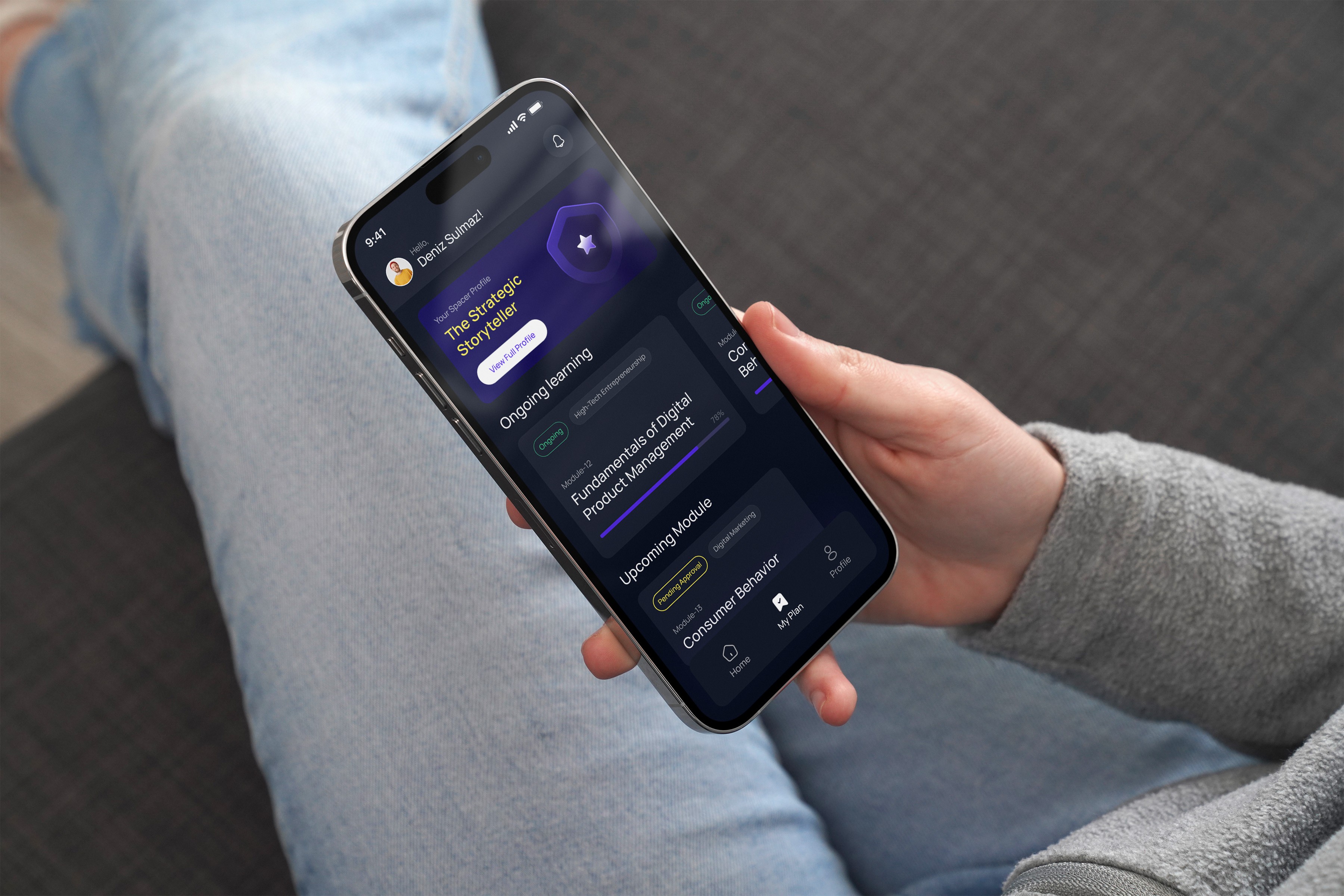
Redefining Student-Centered Academic Learning for Harbour.Space University
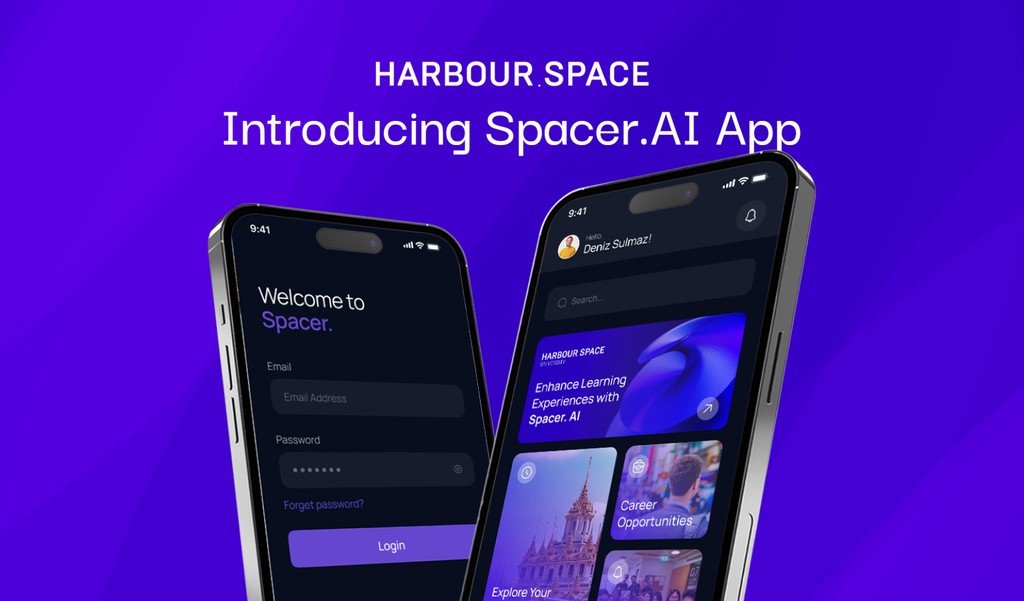
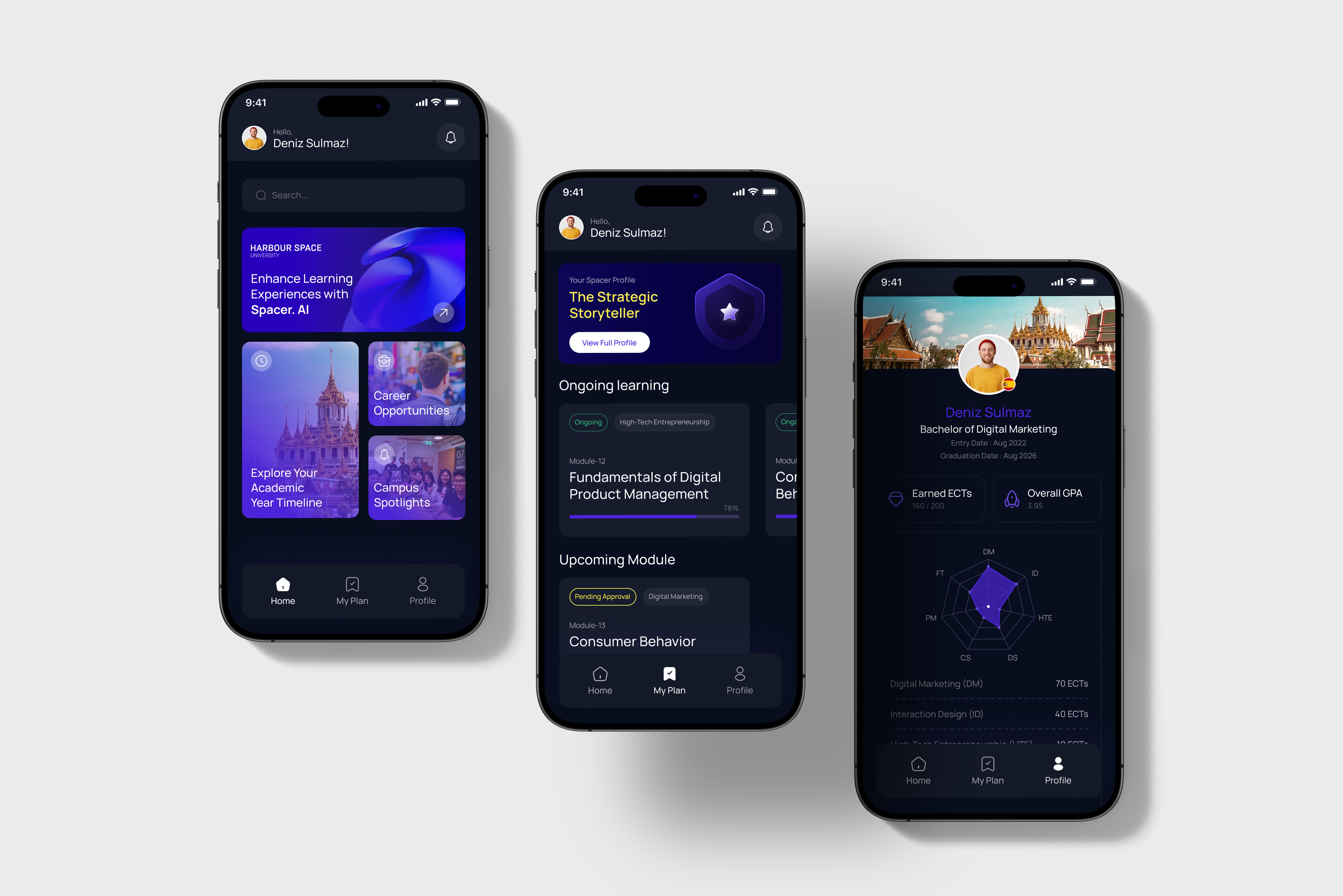
At Harbour.Space University, a new generation of students is reshaping the future of education, exploring diverse fields from Technology and Business to Design. Despite this innovative approach, managing academic paths remained a challenge. That's where Spacer.AI comes in! By integrating personalized insights and interactive tools, Spacer.AI transforms how students plan, engage, and thrive, keeping them connected to their passions and the university community.
Role
Team Lead UX/UI Designer
Skills
Figma, Adobe CC, Figjam, Trello
Collaboration
Project Manager, UX Researcher, Junior UX/UI Designer, Stakeholders
The Inspiration Behind Spacer.AI
Harbour.Space University, known as the "University of the Future," offers a groundbreaking educational model, allowing students to explore courses across disciplines. However, the lack of a streamlined system for course selection and academic planning posed significant challenges. As a Harbour.Space student myself, I experienced these hurdles firsthand. This inspired me to design Spacer.AI, an AI-powered app that aligns with the university’s vision of empowering students to discover their passions while simplifying academic planning.
Reframing the Problem
Managing academic plans at Harbour.Space was a manual and time-consuming process for students. Key issues included:
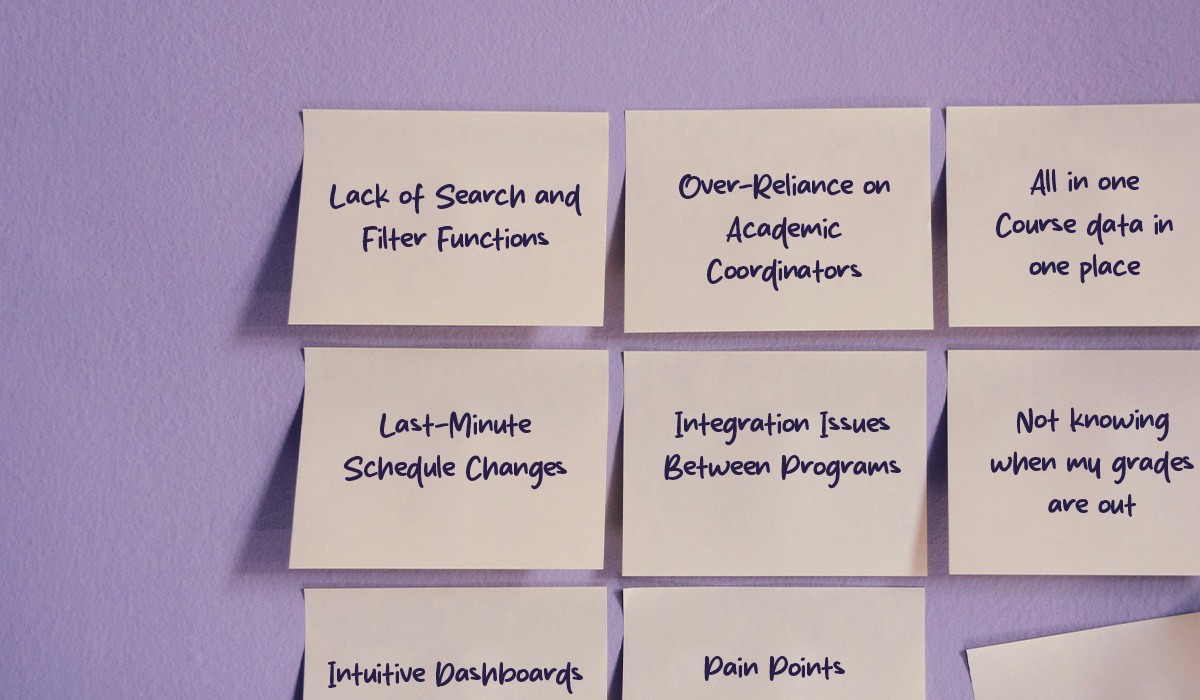
Reliance on academic coordinators for course registration.
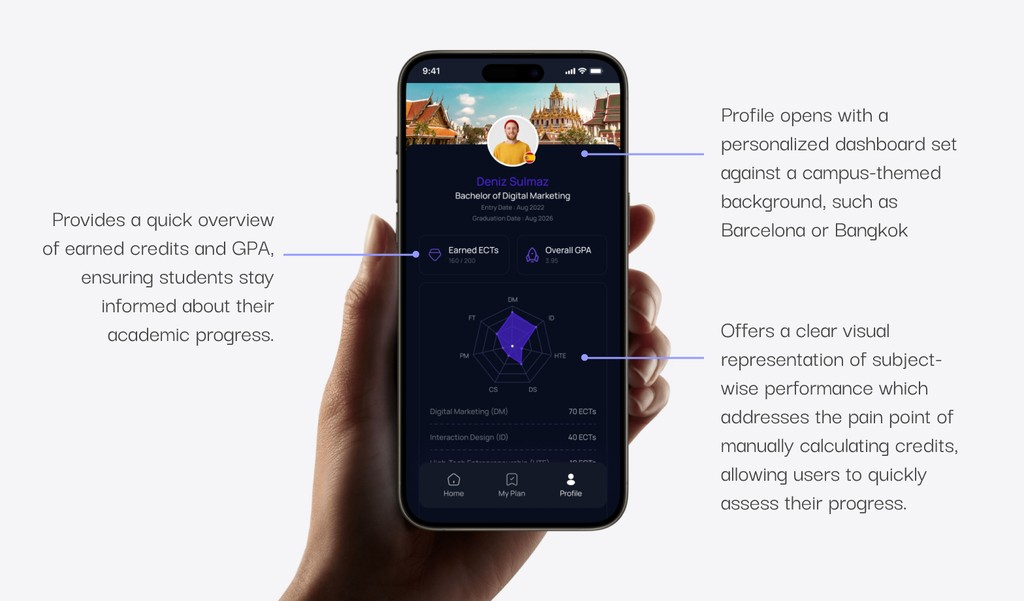
Manual GPA and credit tracking, leading to confusion.
Lack of clarity around mandatory courses and career alignment.
Limited communication channels for classroom updates or events.
Through user research, students and coordinators shared frustrations about inefficiencies, which emphasized the need for an intuitive, all-in-one platform to bridge these gaps.
How might we empower Harbour. Space students to take control of their academic paths while keeping them informed and connected to the university community?
Design Process : Research & Insights
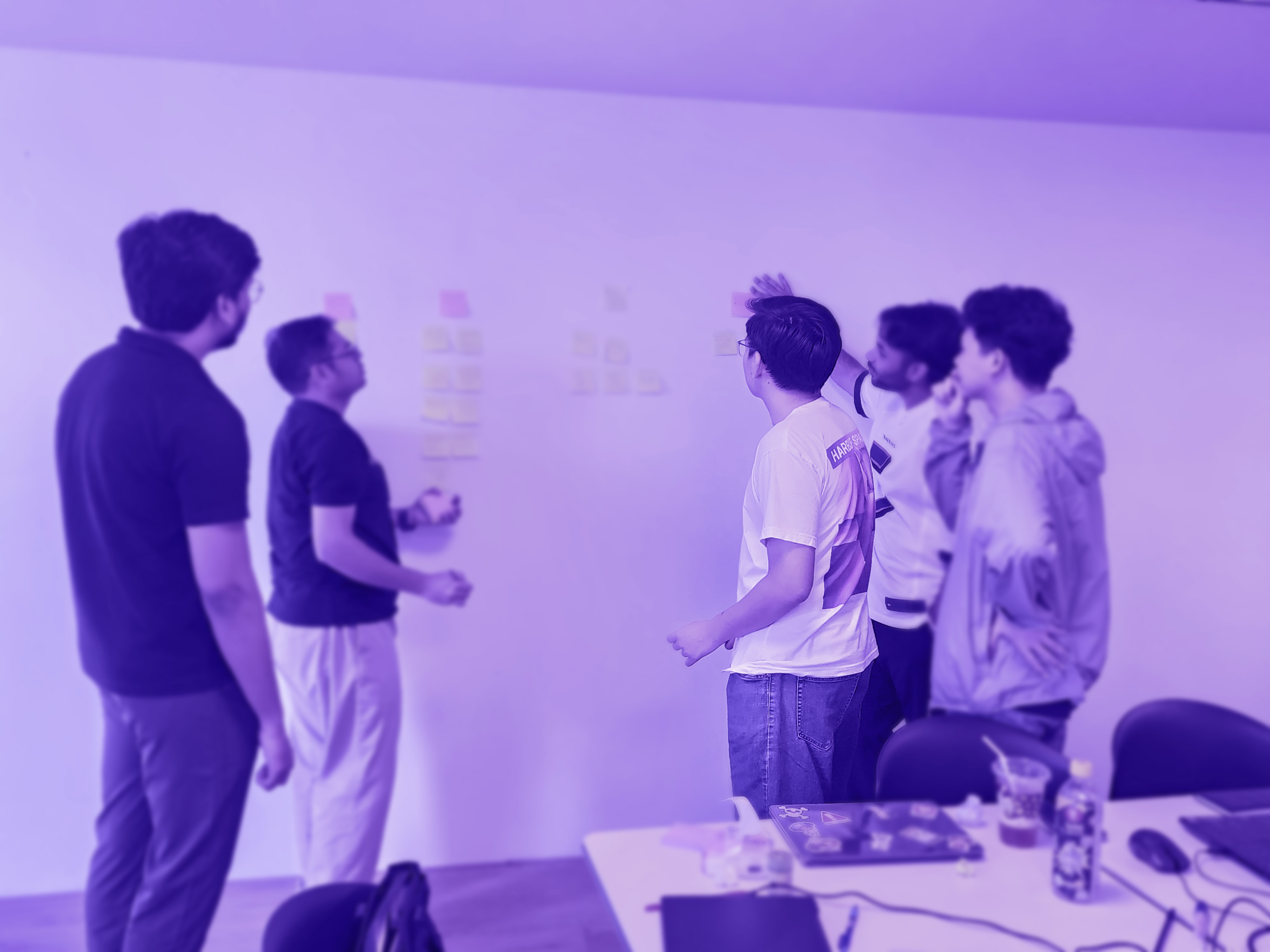
During interviews, students expressed a strong preference for:
Clear roadmaps outlining mandatory and elective courses.
Integrated tools for GPA calculation and module tracking.
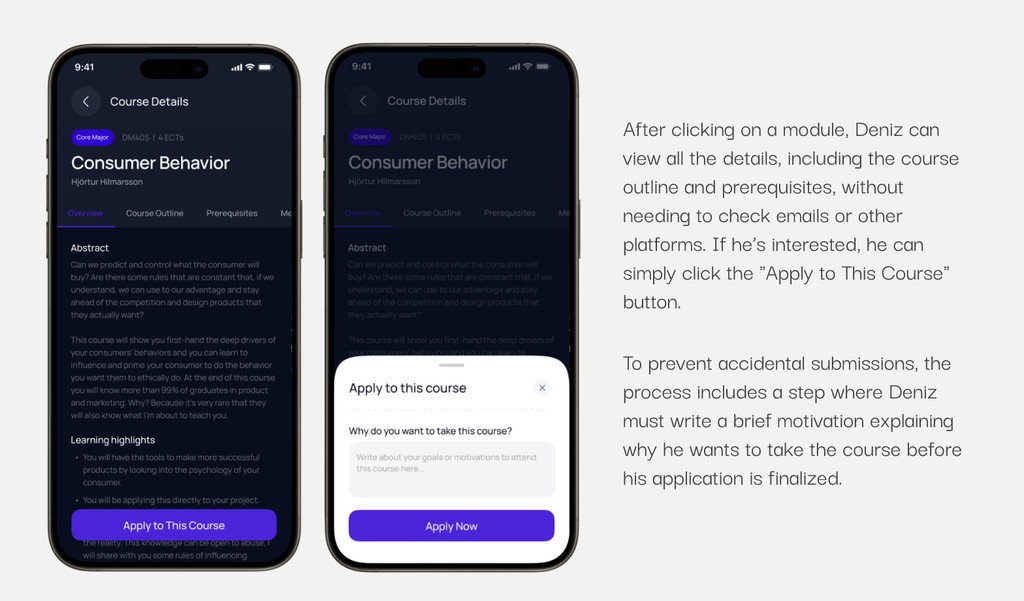
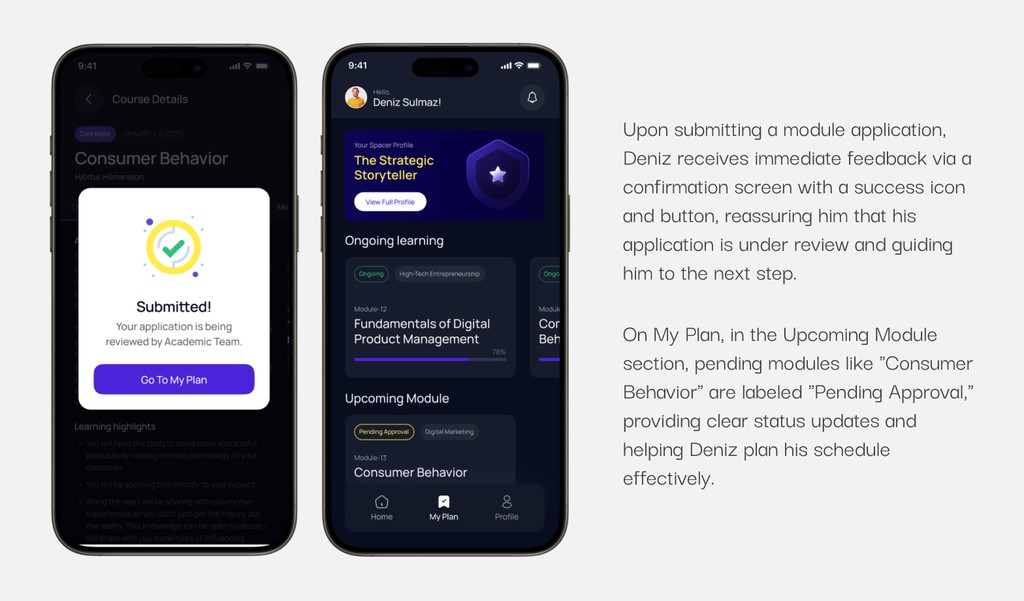
The ability to apply for courses independently, reducing reliance on academic coordinators.
Stakeholders emphasized the importance of gaining deeper insights into student engagement and preferences to create a more connected and supportive university environment.
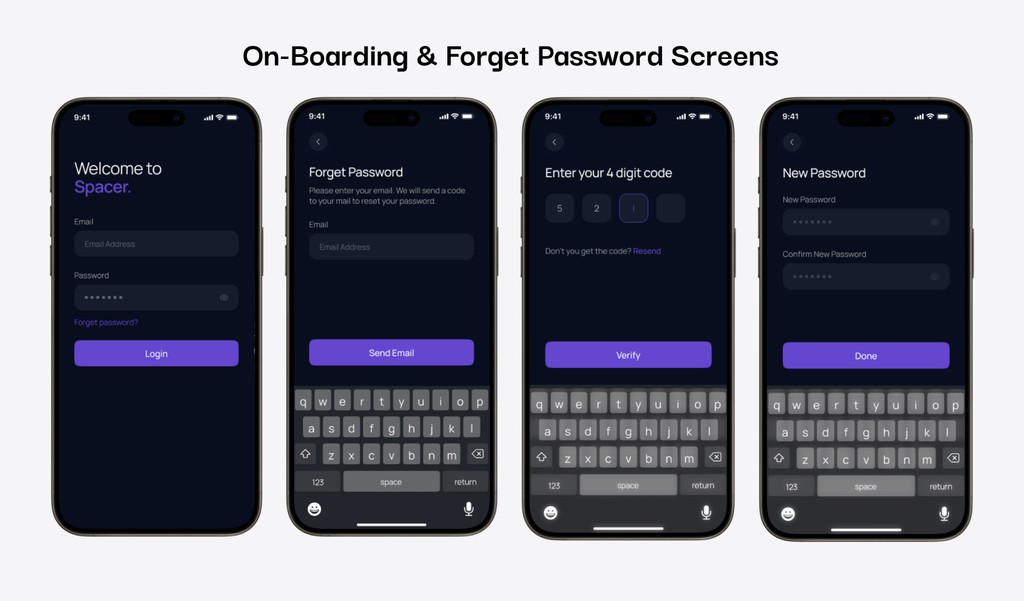
Biggest Challenge: Ideation to Innovation
Our initial concept was a basic module application & management tool. However, iterative brainstorming transformed it into an AI-powered app with standout features, including:
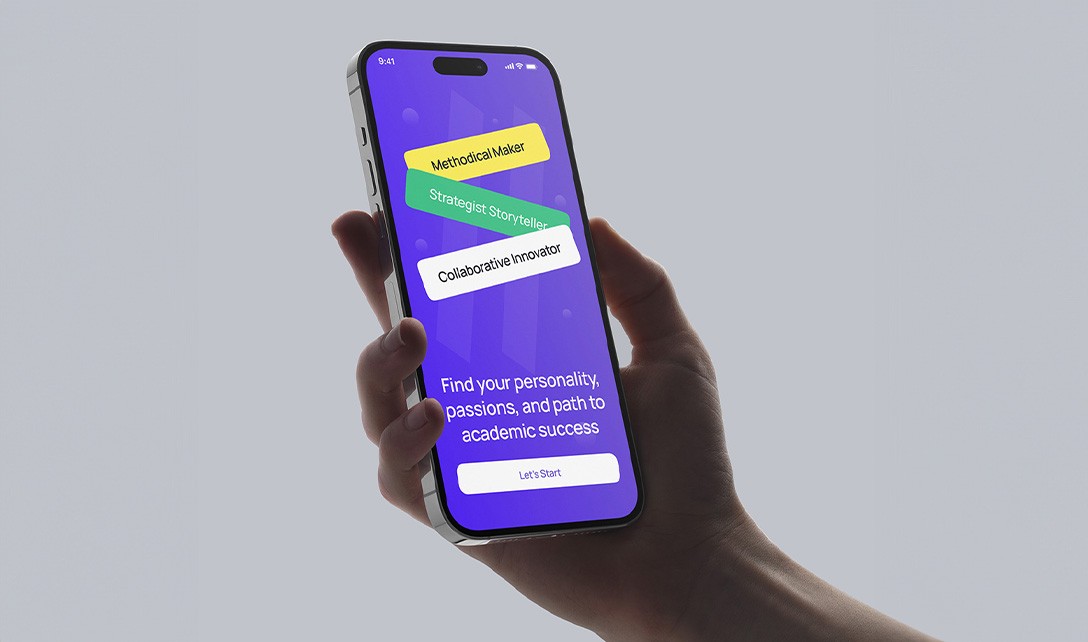
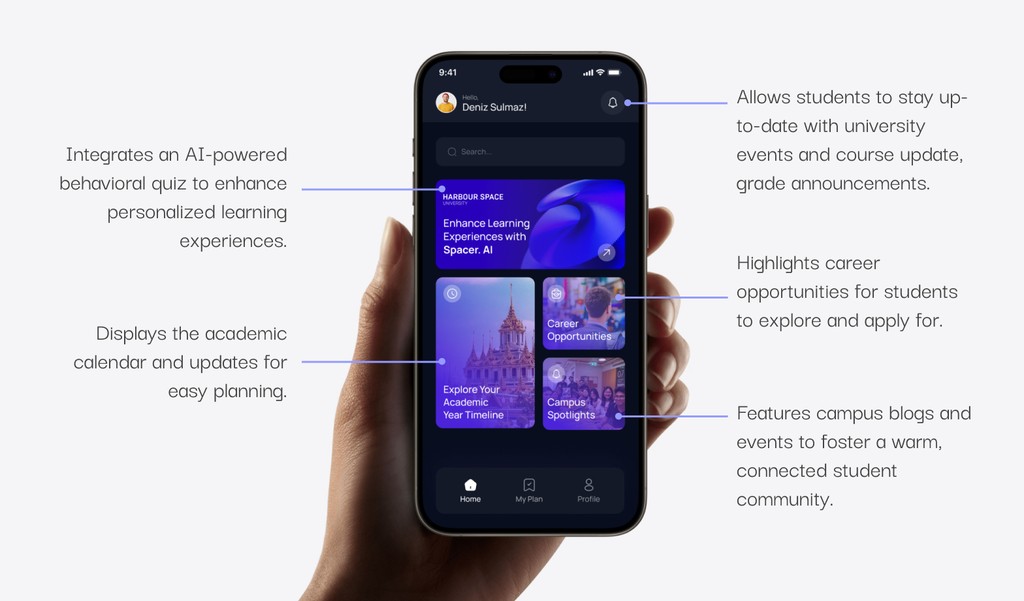
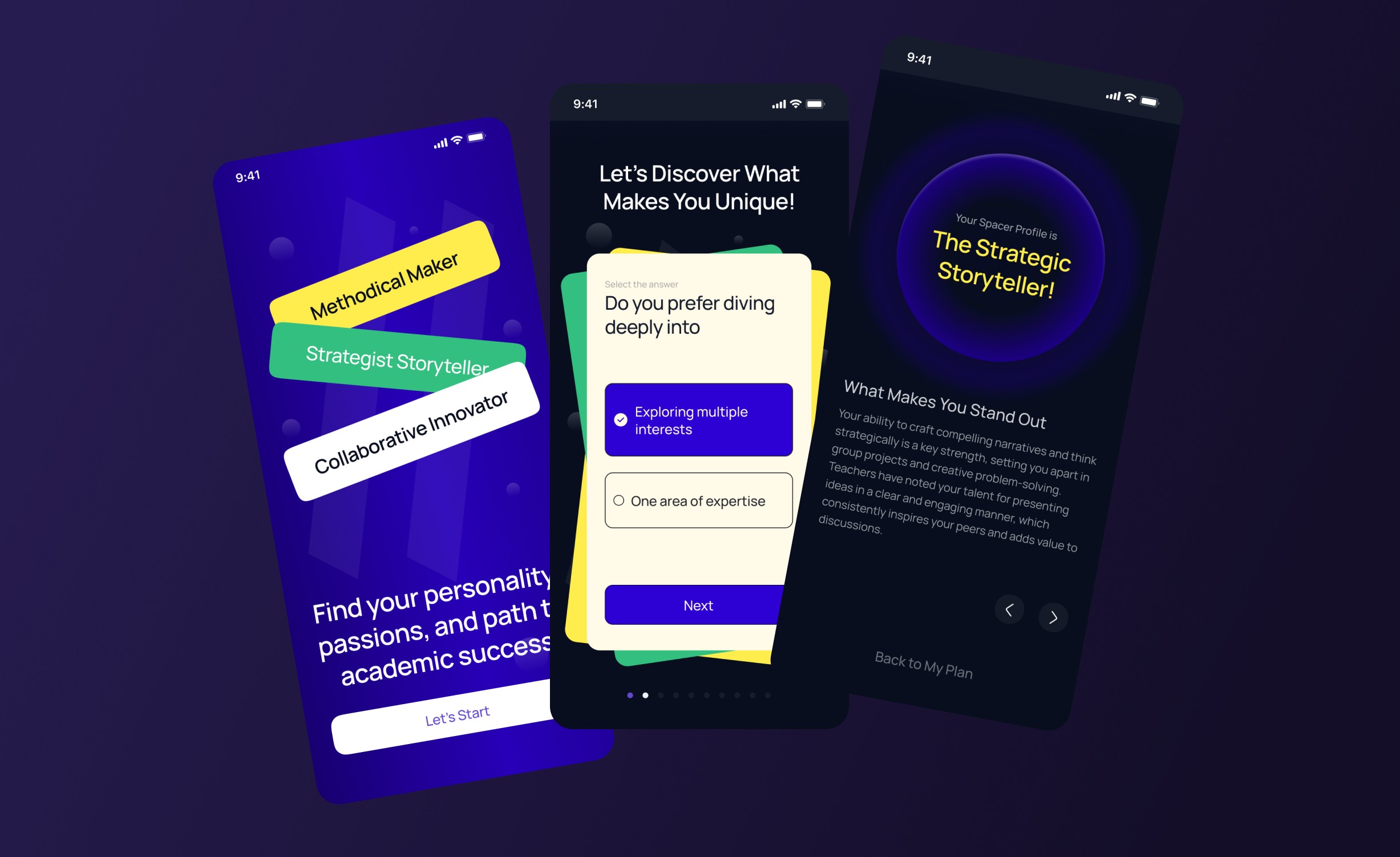
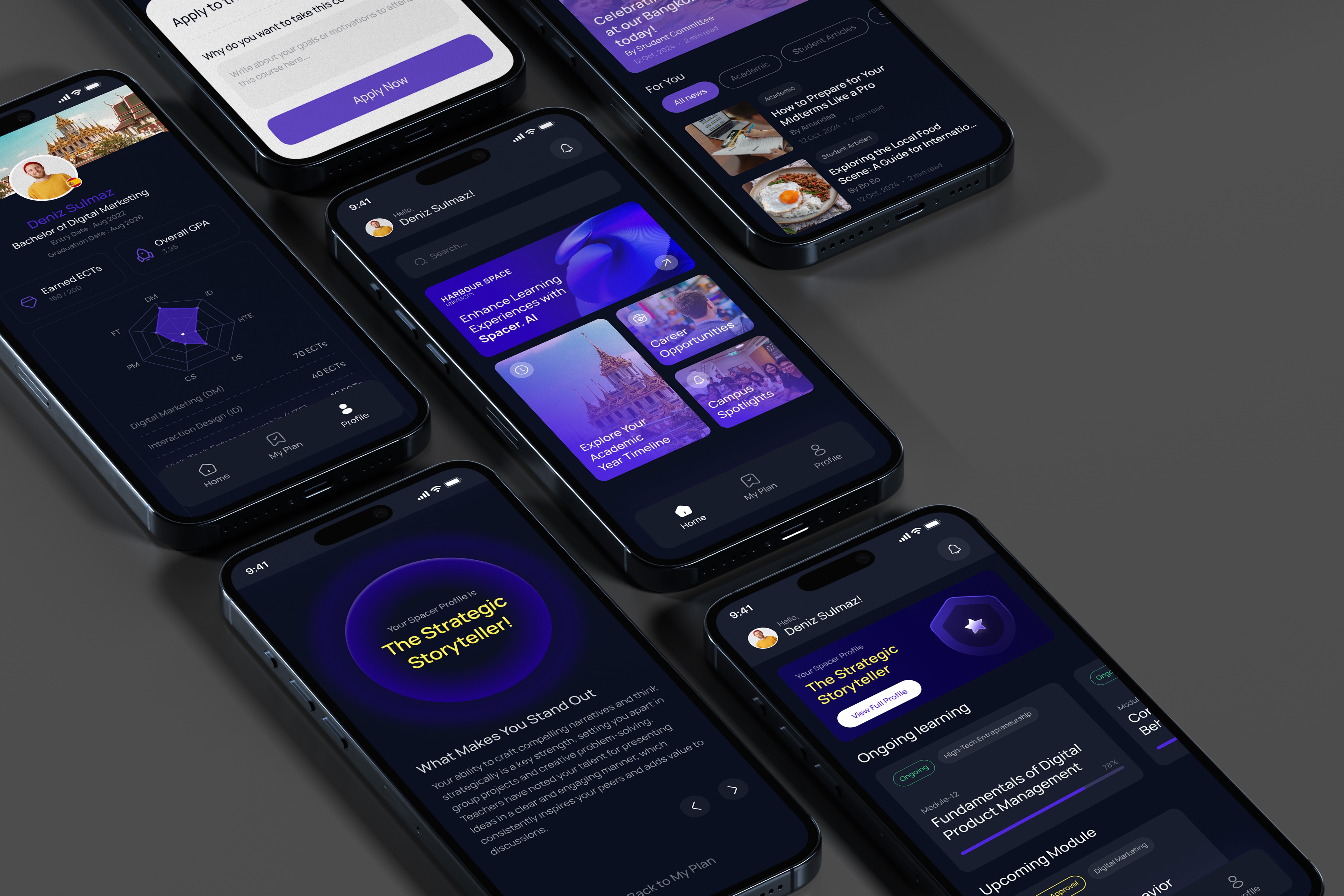
Personalized Quiz: Inspired by Tinder’s swiping interface, students take engaging assessments to identify their passions and career paths.
Comprehensive Dashboard: Infographics like spider charts for credit visualization, inspired by football player ratings, to make data more engaging.
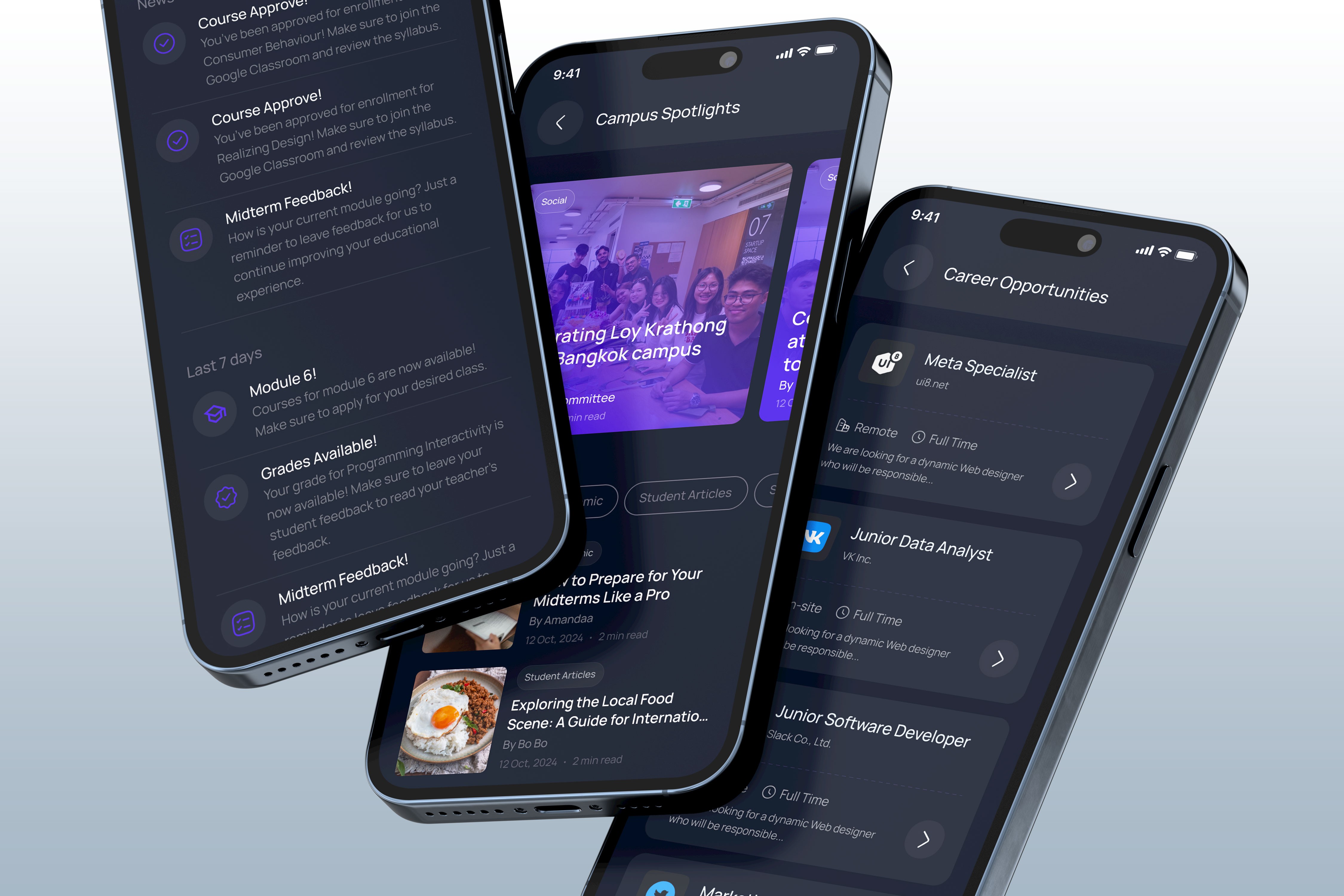
Campus Highlights & Integrated Notifications: Seamlessly integrated to keep students up-to-date with university happenings and job opportunities.
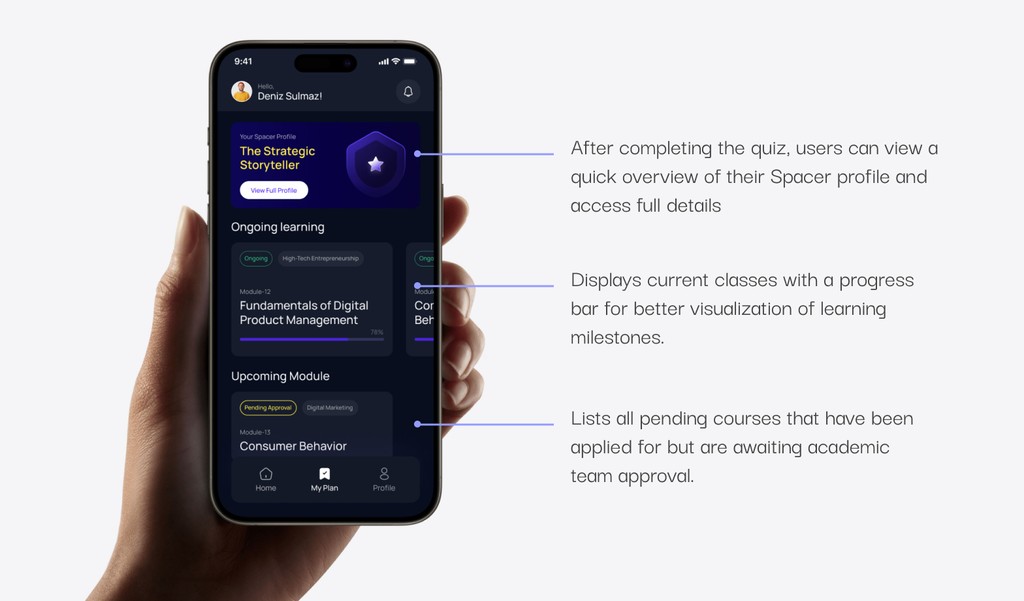
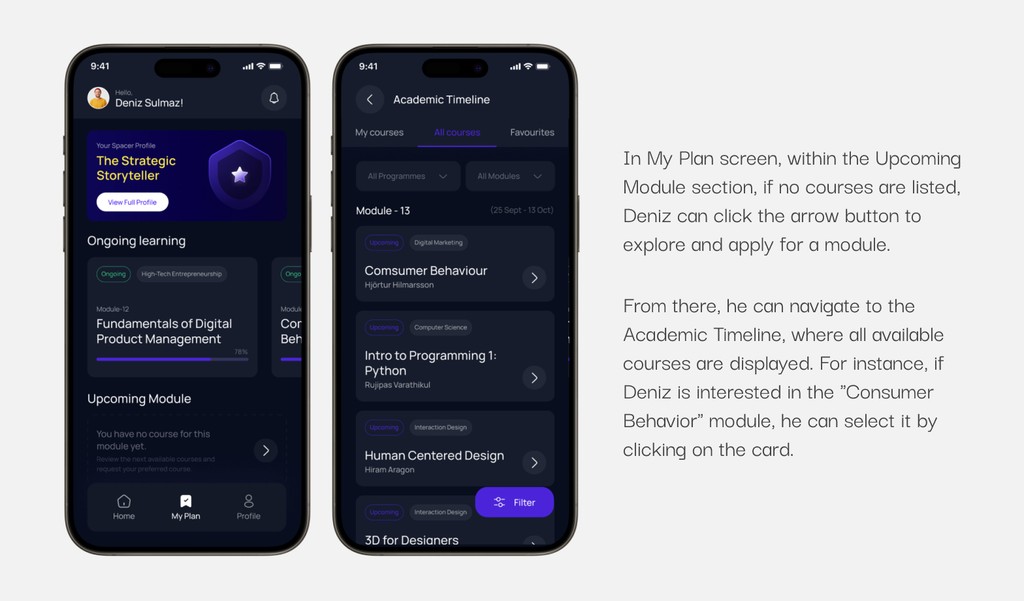
Interactive Planning Tools: Advanced filtering and visualization options for module selection and credit tracking.
The "Aha!" Moment (TL;DR)
During our research, we identified a significant gap in how students stayed informed and connected. While emails and a Discord channel existed for updates, they were rarely utilized, leaving students feeling disconnected from important campus events. We saw an opportunity to integrate real-time campus highlights and notifications directly into the app, making it a central hub for both academic and extracurricular updates.
Additionally, Harbour.Space’s commitment to post-graduation employment opened the door for us to integrate job opportunities, further enhancing the app’s value as an all-in-one platform. Conversations with stakeholders and academic coordinators revealed that a unified, student-centered experience was essential to create a more connected and engaging academic environment. Initially, we aimed to create a simple academic tool, but as we refined the concept, we realized that the real goal was to empower students. That’s the power of user-centered design which is focusing on their needs and creating a platform that truly enhances their learning journey.

Results and Reflections
As the team lead, I’m proud of our collaborative efforts and clear project management. Running three-week sprints allowed us to balance research, ideation, and testing effectively. The use of creative infographics for credit tracking and positive feedback from stakeholders and students affirmed our approach. Our MVP resonated well with users, offering a solution deemed essential for their academic journey. The spider chart for GPA tracking stood out as a feature that both engaged and informed.
Setting the Stage for Long-Term Impact
As product designers, our work doesn’t end with the creation of a visually stunning UI. It's about building a product that evolves. While Spacer.AI's design was crafted to be intuitive and engaging, our next process was setting the stage for its long-term success. In order to ensure the app would not only meet current needs but continue to add value and grow with students over time, we defined key metrics:
Adoption & Engagement: User adoption rate, task completion time (Module Application) , and quiz feature usage.
Efficiency Gains: Reduction in the workload for academic coordinators.
User Feedback: Surveys, NPS, and direct interviews to gauge satisfaction.
Key Learnings
Overall, this project exemplifies the power of user-centered design, blending innovation with functionality to transform the academic experience. While still in development, the app has immense potential to redefine how students plan, engage, and thrive in their educational journeys. Also, this project highlighted several valuable lessons for me:
Start with User Needs: Real-world insights often uncover deeper problems than initial assumptions.
Iterative Design is Key: The transition from a normal module planning tool to an empowering AI platform was possible because of continuous feedback and ideation.
Collaboration is Critical: Effective communication between team members and stakeholders ensures alignment and innovation.